

Parma Apennines · Via Francigena
Castello di Casola
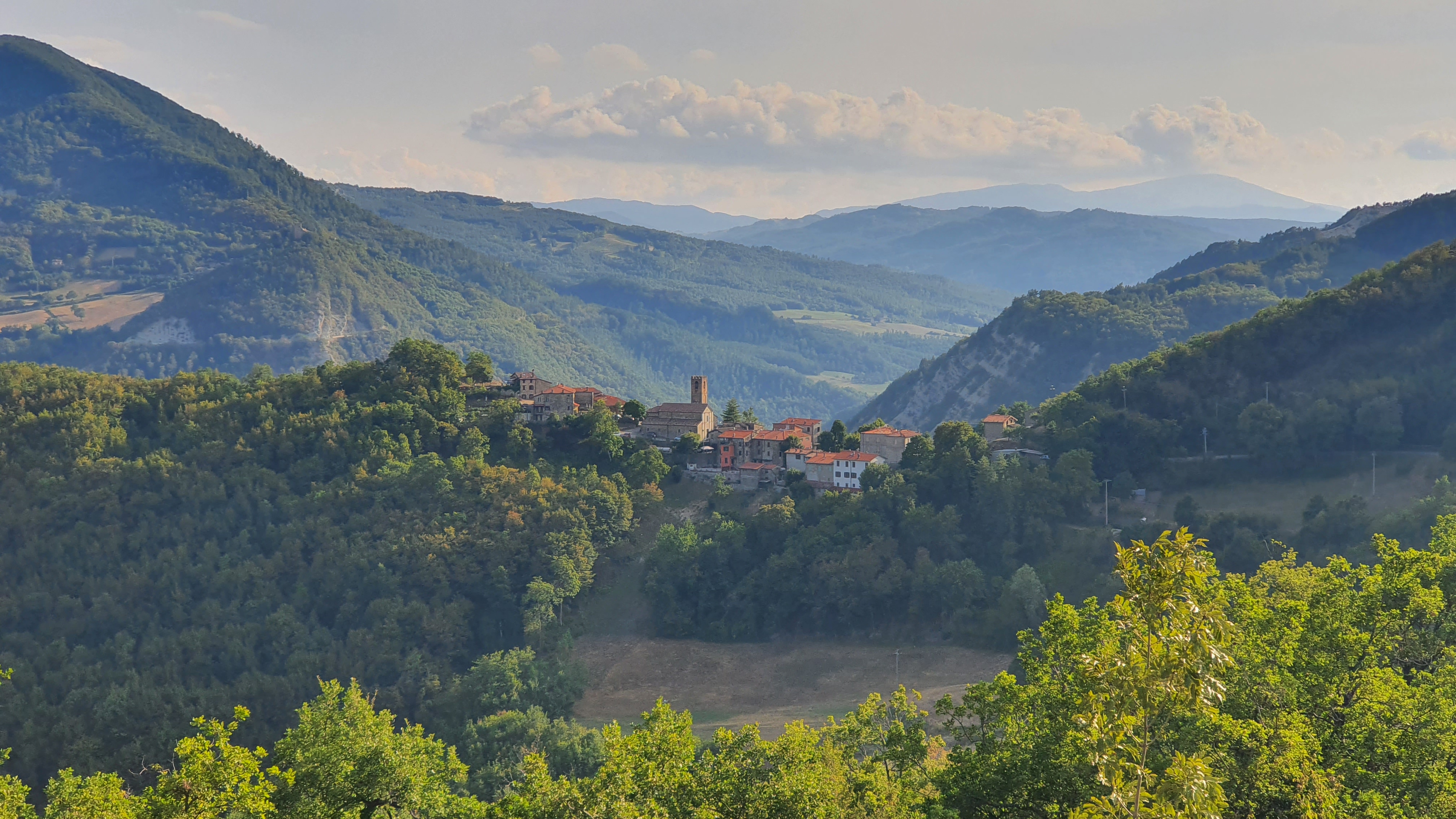
A stone village suspended among chestnut woods, where the pilgrims' path still passes today, slow as ever.
The village
Where time slows down
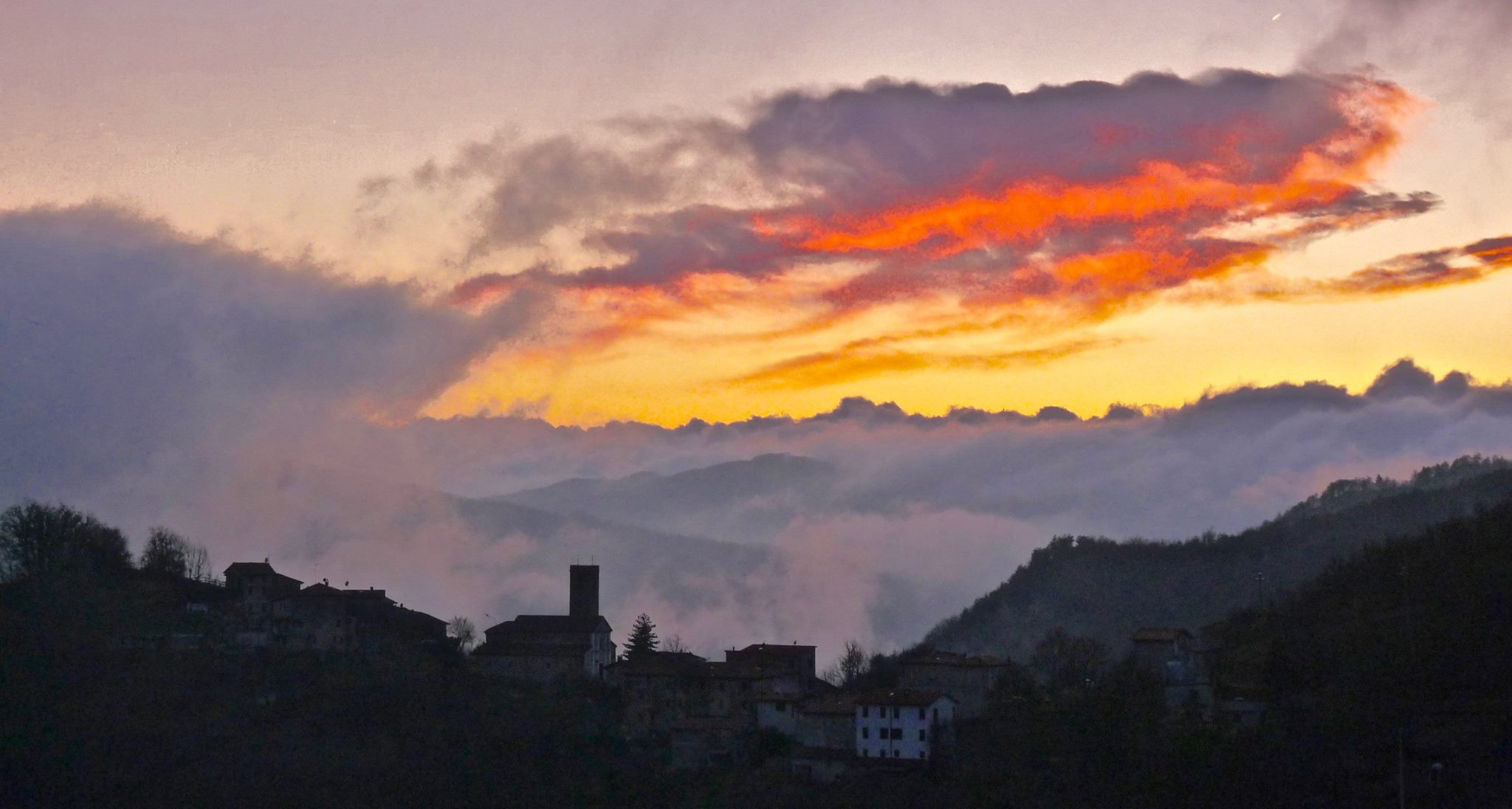
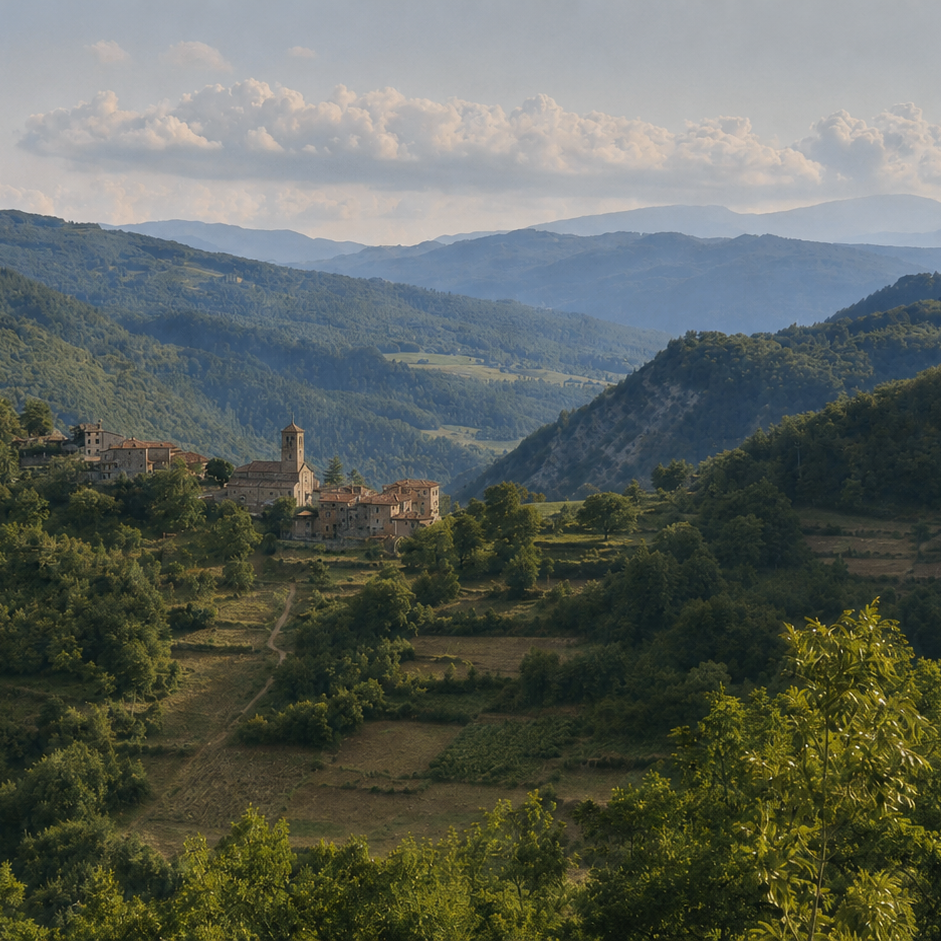
You reach Casola after the last bend in the woods, when the breath of your steps mixes with the morning mist. The houses are built of local stone, their roofs huddled together as if for company against the Apennine wind.
It is a small village, one of those the pilgrims of the Via Francigena have crossed for centuries, on foot, staff in hand, one step after another toward Rome.


The History
The origins of the castle and the centuries spent among these stones.
Read the history ↓
What to See
The church of Sant'Apollinare and the Costa dell'Inferno.
Explore ↓
Where to Eat
Trattorias and farmhouses of the Parma Apennines.
Discover the flavours ↓
The B&B
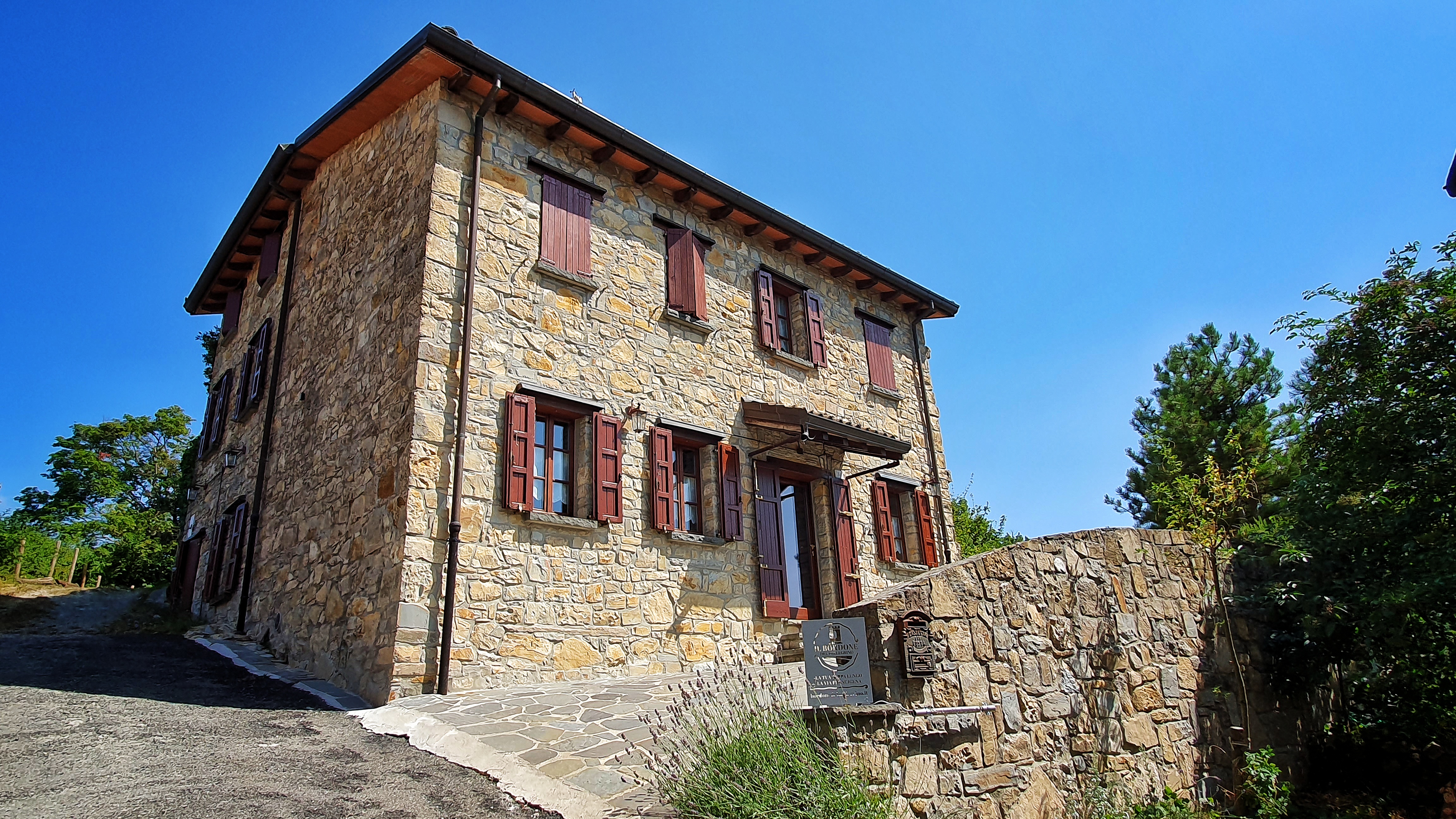
Bordone del Pellegrino: a place to rest, in the heart of the village.
Discover the B&B ↓The origins
The History
The first stones of Casola tell centuries of Apennine history, between noble families and the quiet life of a small ridge top village.
The village stands along the ancient "via di Monte Bardone", the Apennine route walked since the Middle Ages by pilgrims heading to Rome, the road that would later become known as the Via Francigena. The castle was built around 1100 to defend the upper Baganza valley, on the opposite side to the castle of Ravarano, which it still faces today.
After passing under the control of several noble families, including the Pallavicino, who held it for much of the fourteenth century, the manor fell into decline and was gradually abandoned after 1360. All trace of it was lost for centuries, until, at the end of the twentieth century, with the reopening of the Via Francigena path, its ruins were found not far from the church of Sant'Apollinare.

The path
A step on the way to Rome
Casola is not just a village to visit. It is a living stage of the walk: those carrying their staff along the Francigena find here a place to rest and a stamp for their credential, a place where the pace of the journey slows for a moment.
The stretch climbing up from Fornovo di Taro passes through Bardone and Terenzo before reaching Casola; from here the path continues through constant climbs and descents in the conifer woods, as far as the stage point of Cassio.

The Via Francigena from Fornovo to Berceto
Map: © OpenStreetMap contributors · route: Waymarked Trails (OSM data, CC-BY-SA) · full relation: osm.org/relation/1471005
For those on foot
Walking distances and times from Casola
Walking estimates calculated along the Via Francigena route, at a steady pilgrim's pace and excluding stops. Useful for planning the stages toward the Passo della Cisa or toward Fornovo di Taro.
Toward the Passo della Cisa
- Casola → Cassio 6.5 km · 2h00
- Cassio → Cavazzola 2.5 km · 0h40
- Cavazzola → Berceto 7.5 km · 2h00
- Berceto → Ostello del Passo della Cisa 5.5 km · 1h40
- Ostello del Passo della Cisa → Passo della Cisa 1.5 km · 0h25
- Passo della Cisa → Pontremoli 19.5 km · 5h00
To the Passo della Cisa: about 23.5 km, 6h45. To Pontremoli: about 43 km, 11h45.
Toward Fornovo di Taro
- Casola → Terenzo 3.3 km · 0h50
- Terenzo → Bardone 2.5 km · 0h35
- Bardone → Sivizzano 4 km · 0h55
- Sivizzano → Fornovo di Taro 4 km · 0h55
Total Casola → Fornovo di Taro: about 13.8 km, 3h15.
Along these stretches, bars are only found in Cassio, Berceto and Fornovo di Taro: it is worth stocking up on water before setting off from Casola.
Around the village
What to See

Sant'Apollinare, exterior
Built on the site of the old castle between 1568 and 1577, the church still dominates the village ridge today. In 1630 a small oratory dedicated to San Rocco was added beside it.

Sant'Apollinare, interior
The vaults and walls are frescoed, decorated internally around 1960. Inside, several eighteenth century furnishings are preserved, evidence of the village's religious life over the centuries.

Costa dell'Inferno
A rocky spur among the woods around Casola, whose name speaks of how steep the slope is. Like the nearby Salti del Diavolo, it is part of the bare, spectacular landscape of the upper Baganza valley.
Every season, a different village
Casola through the walking year

Autumn
Low mist, chestnuts, the wood catching fire with red.

Winter
Snow on the stone roofs, smoke from the chimneys, silence.

Spring
Chestnut trees in bloom, pilgrims setting off again in numbers.

Summer
Long evenings, shade of the porticoes, dinners outdoors.
A look at the past
Casola through history
Roman origins
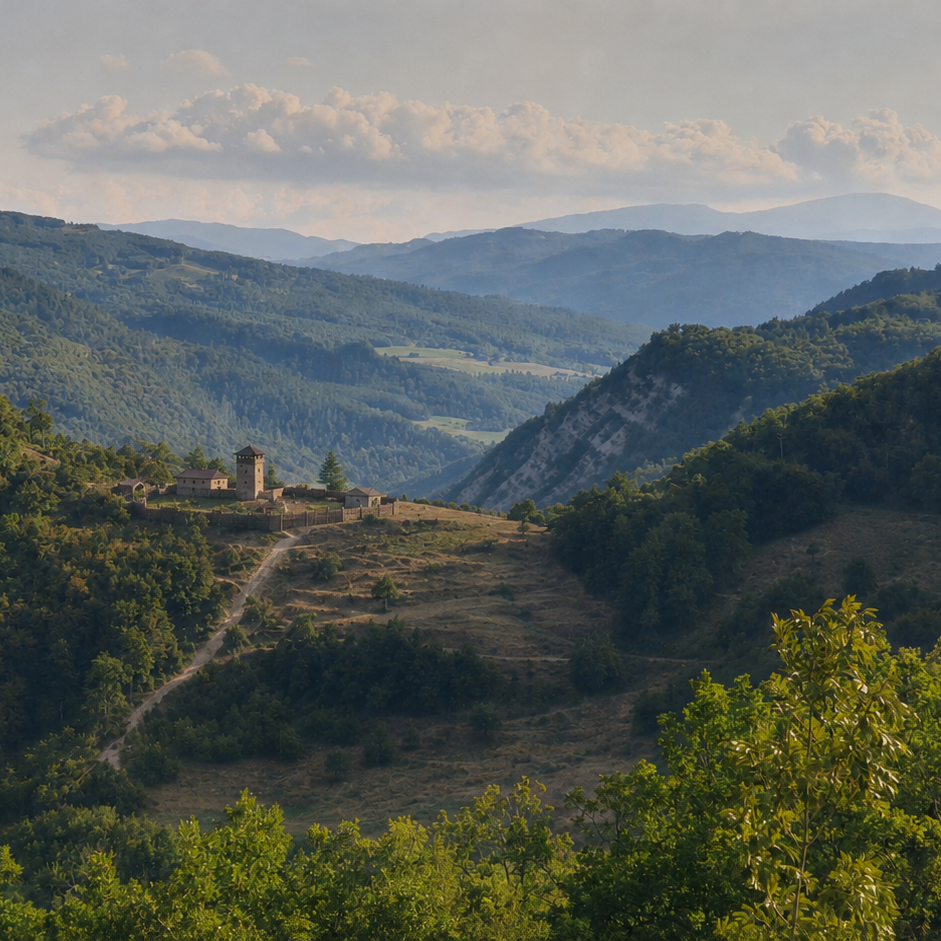
This area was probably already frequented in Roman times: the road linking Parma to Luni crossed these ridges as early as the second century BC. The territory of Terenzo, of which Casola is part, is traditionally linked to the gens Terentia, centuries before the same route became the pilgrims' way.
The castle
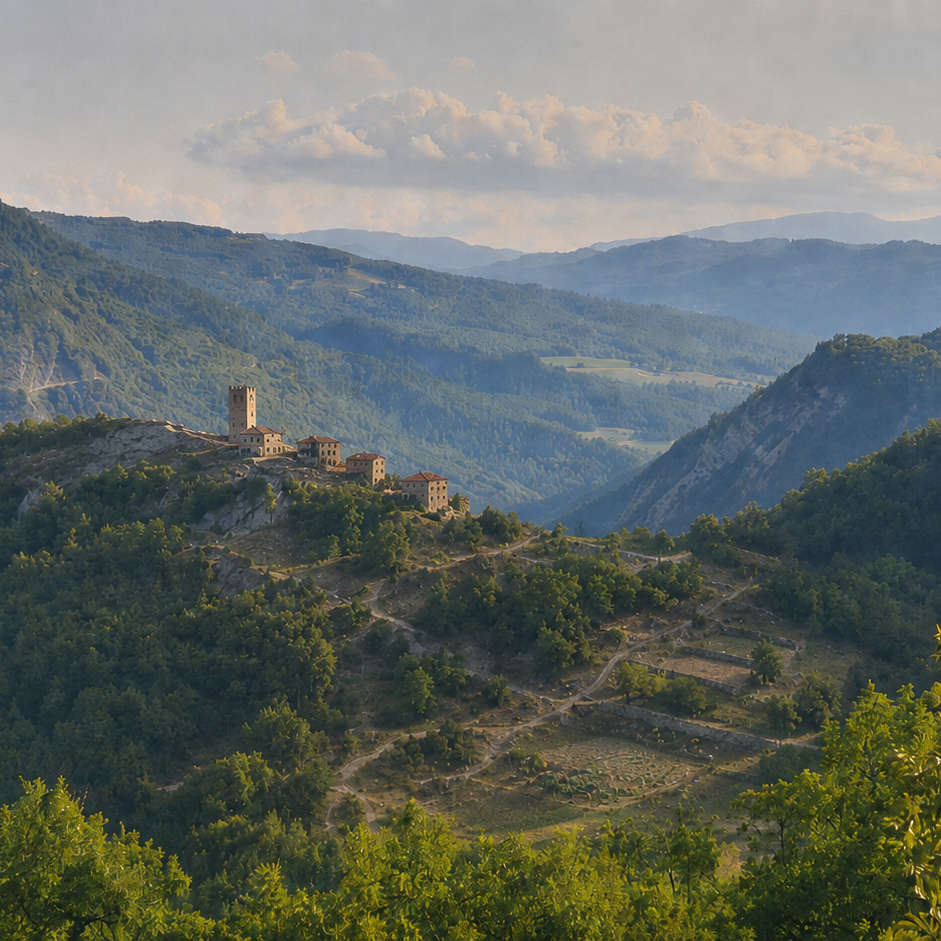
It was built around 1100 to defend the upper Baganza valley, facing the castle of Ravarano. It later passed under the control of several noble families, including the Pallavicino, who held it for much of the fourteenth century. It fell into decline and was abandoned after 1360: all trace of it was lost until the ruins were found at the end of the twentieth century, with the reopening of the Via Francigena path.
Sant'Apollinare
The church was built on the site of the castle, whose dominant position on the ridge it takes up, and was consecrated on 11 August 1577. It owes its name to the village's patron saint, depicted with the palm of martyrdom or with the pastoral staff, the same staff that still accompanies the pilgrims' steps today.
"There are those who walk with their feet, and they are the merchants. There are those who walk with their eyes, and they are the wise. And finally, there are those who advance with their heart, even while moving with their feet and their eyes open, and they are the pilgrim, who seeks the mystery in every creature and in every holy place." Traditional saying about pilgrims bound for the Holy Land
Flavours of the Apennines
Where to Eat
A few chosen addresses, to taste the simple, honest cooking of the Parma Apennines: chestnuts, mushrooms, cured meats, fresh pasta.
See the addresses
Trattoria Cattani
Strada Statale della Cisa 57, Terenzo (PR)A historic meeting point right at the junction between the Cisa state road and Casola, loved by passing motorcyclists. Home style Apennine cooking, with a fixed menu on weekdays.
I Salti del Diavolo
Frazione Cassio 114, Terenzo (PR)An osteria and pizzeria named after the rock formations not far from the village of Cassio. Grilled meat and pizza, informal atmosphere.
Dal Vecio
Strada della Cisa 98, Terenzo (PR)A small trattoria and local produce shop, a stamping point for the pilgrim's credential in Cassio. Cured meats, cheeses and game dishes such as venison stew.
Agriturismo Il Fagiano
Strada del Fagiano 8, Selva del Bocchetto, Terenzo (PR)A family run farmhouse with views over the Taro and Ceno valleys, homemade pasta and bread, meat from their own farm. Booking recommended.
Ca' dal Brass
Località Castellonchio Centro 46, Berceto (PR)A nineteenth century stone farmhouse along the Via Francigena toward Berceto, between Parma and Tuscan tradition. Grilled specialities in a rustic setting.

Images of the village
Gallery


Where to sleep in Casola
B&B Bordone del Pellegrino
An oasis of tranquillity set within an evocative stone house, in the heart of the village. The Bordone del Pellegrino welcomes those walking the Francigena and those simply looking for a few days of quiet among these woods, a place where time slows down and silence becomes a travelling companion.
How to get here
Where to find us
By car: Casola can be reached in about 45 minutes from Parma, and in about 20 minutes from the Fornovo motorway exit on the A15. The village is a hamlet of the municipality of Terenzo.
On foot, along the Francigena: the path climbing up from Fornovo di Taro passes through Bardone and Terenzo before reaching the village of Casola.
Contact: bordonedelpellegrino@gmail.com